Week commencing 15th December was an auspicious one for public transport in the north east. The line from Newcastle to Ashington via Seaton Delaval opened, with further intermediate stations at Newsham, Blyth Bebside and Bedlington due to open later. Further, the first of the new fleet of Stadler trains went into public service on the Tyne and Wear Metro. Unfortunately, the Gateshead flyover was also closed as a result of damage possibly caused by vibration from the Metro trains. Metro service was suspended between Heworth to Monument through the middle of Newcastle.
On the Saturday, I arrived at Gateshead and boarded a “Metro Replacement Bus” driven, fortuitously, by Northumberland County Council’s Senior Programme Officer (Rail) who was able to brief me about the new line on the way over the Redheugh Bridge to Central Station. I was there to join the Northern Rail train to Ashington through the south east Northumberland coalfield, which left punctually at 1115 calling at Manors and Seaton Delaval. It was busy, but not as full as southbound trains from Ashington with residents wanting to try the new service. There’s a special £3 fare each way. Note that Ashington will be more used as an origin rather than a destination. There’s not a lot to see and do in the town, and the best pub is the J D Wetherspoon House named after the world-class Guyanese batsman who was brought in to play for Ashington Cricket Club in the 1964 season. A small but powerful player, Kanhai was one of the West Indies’ leading run-scorers during the 1960s and 70s.
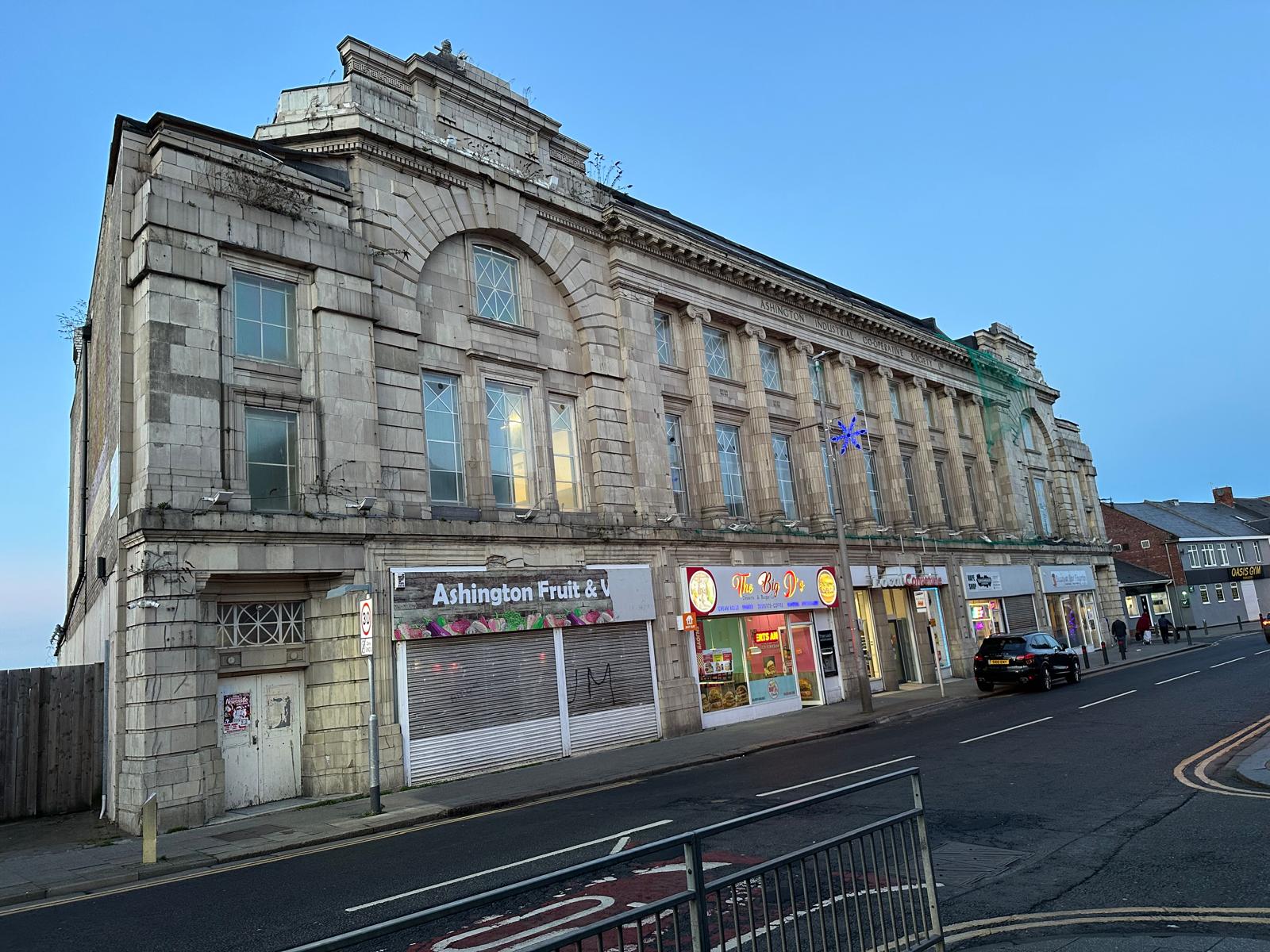
The grandest building in town is the three storey Ashington Industrial Co-Operative Society Ltd (pictured) with classical architecture but now populated only on the ground floor with a series of low grade outlets. Station Road no longer leads to the station, but head east along it, go behind Home Bargains and the brand new Leisure Centre and Library, and you’ll find McDonald’s. Outside McDs, follow the spine road east with a pedestrian and cycle path towards Woodhorn Colliery which was one of the five pits in what became the world’s largest pit village.
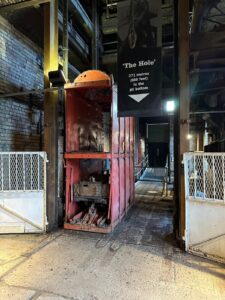
There’s a level crossing after five minutes allowing access over the railway line to the Queen Elizabeth II Country Park. It’s a pleasant stroll round the lake to the Woodhorn Colliery Museum, open Wednesday to Sundays,10am to 4pm. This was a working colliery from 1894 to 1981 when it closed, to reopen as a museum in 1989. The museum was substantially expanded with The Cutter building opening in 2006. I was only visitor who turned up for a 1400 tour which meant I could have a good discussion with the guide, and I followed this up with a visit to the Pitmen Painters exhibition and an interesting video. Some of the colliery buildings were closed off for maintenance. However, the permanent exhibition and a special display about the Miners’ Strike of the 1980s and the battle of wills between Arthur Scargill and Margaret Thatcher were absorbing.
When I left Ashington, I stopped off at Seaton Delaval. It was windy, wet and dark by the time I reached the welcoming Hastings pub which seemed much more attractive than a walk into town. The barmaid told me it was about 40 minutes walk to the National Trust’s Seaton Delaval Hall, and anyway, it was shut as a result of Storm Eowyn. (If you want to go to the Hall, which is nearer Seaton Sluice, plan instead on using Arriva bus X7 which stops close by.) Instead of walking into the village, I enjoyed a pleasant pint of real ale. Going back to the station for the next train to Newcastle, I noticed a very optimistic 10mph sign applicable to cars driving down to the car park. Good luck with that!