
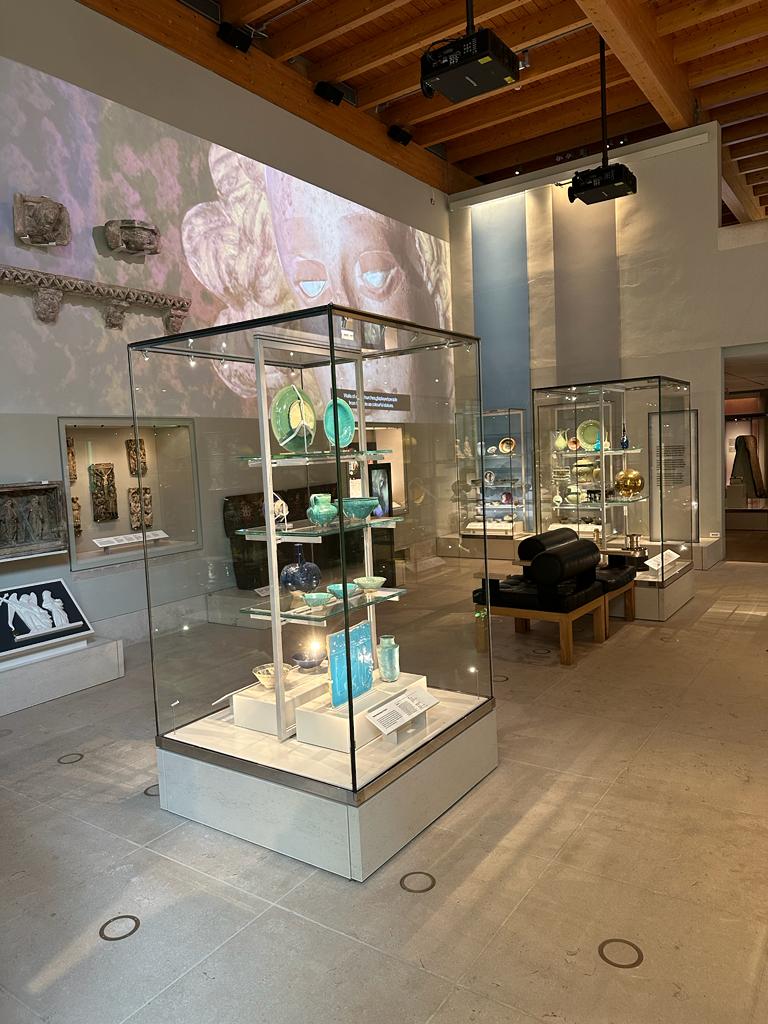
I visited Glasgow to seek out the famous Burrell Collection: huge, accessible, and, most importantly: free!
From the northeast you can travel to Glasgow Queen Street via Edinburgh with LNER/Lumo/XC, continuing to Glasgow by Scotrail. Alternatively, use Northern Rail via Carlisle to pick up the Avanti West Coast service into Glasgow Central. From there, the local service to Pollokshaws West takes only nine minutes, followed by a short walk over the park to the Burrell Collection set on the beautiful Pollok House grounds.
The famous Burrell Collection in Glasgow
Sir William Burrell made his fortune from one of the leading cargo shipping companies in Britain and made a substantial profit when he sold his ships during World War I. He had an interest in art as a boy and used his wealth to acquire an amazing collection of artefacts and art. As a Glasgow businessman, he bequeathed his collection to the City of Glasgow as long as it was situated in a building in Parkland.
I only explored one floor properly and was surprised to learn that there were two more as I left. However, I wanted to pack in a few more visits using the Glasgow Subway, which has an All Day ticket for £4.20. Singles are £1.55 between any two of the 15 stations, and it takes 24 minutes to complete either the Outer Circle (clockwise) or the Inner Circle (anti-clockwise). Three or more trips and the All Day ticket is a better value. Frankly, the attractions detailed here are better visited over two days.
More Attractions in Glasgow using the Glasgow Subway
I went first to Partick, from where it is a ten-minute walk to the Transport Museum, which covers cars, lorries and bicycles, as well as public transport with mock-ups of streets from the past. It’s free and fascinating.
Charles Rennie Mackintosh (CRM) is recognised as Glasgow’s most famous architect. He famously created the Glasgow School of Art, which was destroyed by two fires in the last few years, due to reopen in 2030. In 1896, the Free Church of St Matthew, Glasgow, commissioned a new church and hall from the experienced Glasgow architectural practice of Honeyman and Keppie to be located within the developing area of Springbank. John Honeyman allocated the job to his young and talented trainee architect, CRM.
The site at Queens Cross was an awkward one, being on a corner plot and butted by tenements and a large warehouse. In keeping with their beliefs, the Free Church required simplicity in design. It opened in 1899, but following declining attendance, the building was acquired in 1977 by the CRM Society. It’s a bit of a hike along Maryhill Road from St. George’s Cross Subway. Queens Cross was the only Mackintosh church to be completed.
So, instead, I went to a building completed in 1996 but designed by CRM and his wife Margaret MacDonald in 1901. The “House for an Art Lover” is situated in Bellahouston Park, walkable from Ibrox station. The house is a prominent example of the Modern Style. It serves as a venue for art exhibitions and weddings as well as being a visitor attraction.
And so round the circle to Buchanan Street for Queen Street for a train back towards Edinburgh, selected from the best train fares on Nationalrail.com. There are many options for finding the best value journeys to Glasgow, so make sure you check them out online. We are great supporters of railway ticket offices, but try us out 24 hours for the full picture.


