

Places to Go is our monthly feature, NationalRail.com owner and former stationmaster Alex Nelson explores UK tourism by rail. This month Alex discusses his visit to High Wycombe!
My recent visit to Gerrards Cross confirmed my findings of other suburban railway stations – very few car park spaces being used, and hardly any leisure traffic on the trains, even though it’s no riskier than a trip to Waitrose. If we are ever to reduce pollution and carbon emissions from road traffic, we need people back on the trains. Where to recommend for a short trip to build up confidence in traveling on the railway?
I decided on High Wycombe, pop 125,000, around 14 minutes and £8.60 day return away. In the undulating parkland to the north is the National Trust’s property at Hughenden Manor, which was the home to Benjamin Disraeli, an Anglo-Jewish politician in the reign of Queen Victoria, who was Prime Minister from 1874-1880. He died aged 76 in the following year. She once asked him what religion he was, and he replied that he was the blank page between the Old Testament and the New Testament.
I started my visit to High Wycombe by finding the remains of Isambard Kingdom Brunel’s train shed which was constructed for the Great Western Railway in 1854, adjacent to the current taxi rank at the station. Then into town for coffee in All Saints Church, a large town centre place of worship with a warm welcome from the stewards, but much of the building sadly cordoned off to prevent a proper look round. Then through the Eden Centre where I found an old but smart Leyland National 2 bus from the 1970s acting as a COVID19 antibodies testing unit. The bus was in a reassuring medical grade green and white livery and was being well patronised.
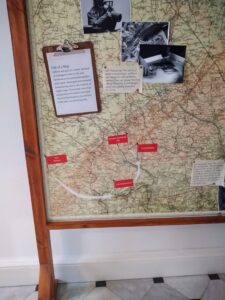
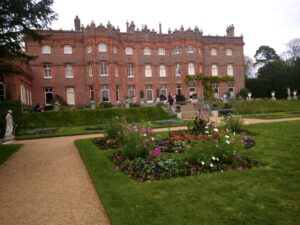
On to the bus station, relocated since my last visit, and I found the bus 300 to Aylesbury on bay 7 to take me just over a mile to Hughenden Manor stop, a ten-minute walk up to the house. At the moment you have to book, and spaces for the following week become available on a Friday. They are not used to people arriving on foot, since the reception was up in the car park, but a quick phone call from the shop sorted that and I was delighted to discover that 28th September was the first day that the house itself was reopened to visitors since March, with all the busts and statues wearing face masks. Further, a new exhibition opened in June 2019 told the wartime story of the house as “Hillside” which was a cartographic unit producing maps for Bomber Command crews from the results of photographic reconnaissance. The Regency style house is in red brick with formal and informal gardens, and four trails around the surrounding woods. I chose the purple one which took 45 minutes.
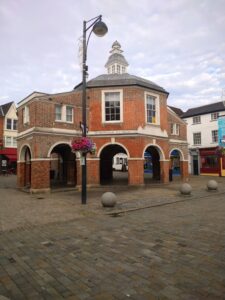
After the café and house closed at 1600 I made my way back into town on the 300 bus (although a footpath across the parkland down would have been a good alternative) and found the Cornmarket, pictured, on the way back to the station. I also learned that High Wycombe was the chair-making capital of the Empire – in 1875 the town produced 4,700 chairs a day.
In addition, a special chair is used to weigh the incoming and outgoing mayor as it has been since 1678, to establish whether the mayor has put on weight during his period in office, presumably at the expense of the taxpayer. Meanwhile, the taxpayer is subsidising the cost of running empty trains at the moment which I would encourage you to have a ride on!
Alex Nelson
Nationalrail.com
If you’re planning a trip soon, check out our money saving tips. Always remember to buy your cheap train tickets from NationalRail.com.


